What ports are used on the core switch
Core switch ports are typically high-speed uplink and modular ports such as SFP, SFP+, SFP28, QSFP+, and QSFP28, designed for aggregation and backbone connectivity.
Overview of Core Switch Ports
Core switches, positioned at the backbone of enterprise or data center networks, use ports optimized for high throughput, low latency, and flexible connectivity . Unlike access switches that connect directly to end devices, core switch ports primarily link to distribution or aggregation switches, providing the central data pathways for the network .
Common Port Types
- SFP (Small Form-factor Pluggable): Used for 1G connections, often for fiber optic or copper uplinks. SFP ports allow modular transceivers to connect over varying distances .
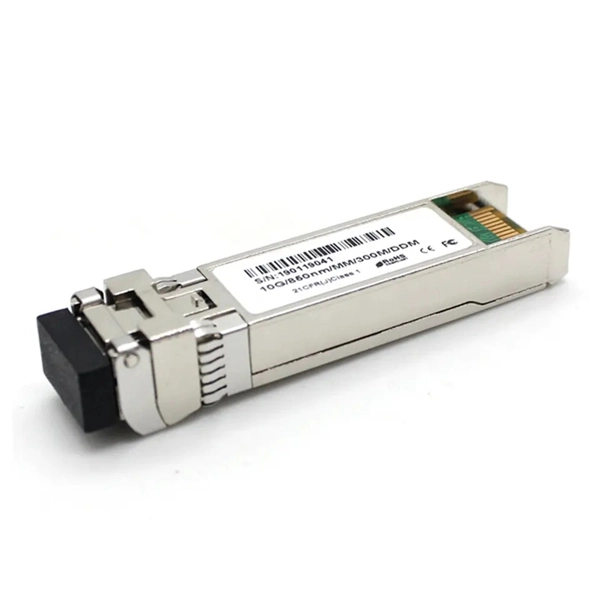
- SFP+: An enhanced version of SFP supporting speeds up to 10Gbps. SFP+ ports are widely used in aggregation and 10G campus backbones .
- SFP28: Supports 25Gbps per lane, commonly found on core or aggregation switches in data centers. It maintains the same compact form factor as SFP+ while providing higher bandwidth .
- QSFP+ (Quad Small Form-factor Pluggable Plus): Supports 40Gbps connections, often used in spine-leaf architectures to connect multiple leaf nodes. Each QSFP+ port can be split into four 10G SFP+ connections using breakout cables .
- QSFP28: Designed for 100Gbps Ethernet, supporting four lanes of 25Gbps each. QSFP28 ports are ideal for high-performance data center backbones and can also support breakout modes for flexible deployment .
Functional Characteristics
Core switch ports are designed for high-density, high-speed, and modular connectivity. They often support features such as link aggregation (LAG), VLAN routing, Layer 3 IP routing, and redundancy protocols like HSRP or VRRP . These ports are typically modular and hot-swappable, allowing network expansion without downtime .
Summary
In essence, the ports of a core switch are uplink and modular interfaces that provide high-speed, reliable connections between distribution switches and other core network devices. The most common types include SFP, SFP+, SFP28, QSFP+, and QSFP28, each supporting progressively higher bandwidths and flexible deployment options for enterprise and data center networks .
 Industry
 Core Switch vs. Distribution Switch vs. Access Switch
What is a Core Switch? A core switch is the primary switch installed at the backbone of a layered or hierarchical network. These data switches are responsible for routing and data switching at the core
 Industry
 Campus LAN Core and Distribution Switches
Cisco Catalyst and Meraki Campus LAN core and distribution switches are scalable, secure network switches with exceptional intelligence.
 Industry
 Core Switch vs Access Switch | Definitions and Key Differences
While the core switch may only be connected with a few distribution switches, the majority of access switches are required to connect a variety of end-user devices, including IP phones, PCs,
 Industry
 What Is a Core Switch in a Network?
Core switches must support extremely high throughput, often with port speeds ranging from 10 Gigabit Ethernet (10G) to 400G+ Ethernet. To achieve wire-speed forwarding, these devices
 Industry
 What is a Network Switch and How Does it Work?
The Switch is a network device that is used to segment the networks into different subnetworks called subnets or LAN segments. It is responsible for filtering and forwarding the
 Industry
 What is a Core Switch | Functions and Difference over Normal Switch
What is a core switch and how it works? This article builds the basics of this kind of switch for the ones who don''t know anything about it. What is a Core Switch? It is a powerful
 Industry
 What is Core Switch and How to Choose?
Conclusion Simply put, knowing what a core switch does and how to pick the right one is key to building a solid network. Core switches are basically the backbone—they keep everything
 Industry
 Introduction to Core Switch Configuration
The layer 4 switching is used for fast access to network services. In this switching, transmission is determined not only by MAC address (layer 2 bridge) or source/destination address (layer 3 routing),
 Industry
 Understanding the Core Switch: Key Differences and Uses
Explore the core switch''s role as the backbone of your network. Discover key differences, uses, and insights into layer 3 core switch technology.
 Industry
 What Is Core Switch?
The power requirements of a core switch vary depending on its size, features, and port density. High-density switches with many ports and advanced features tend to consume more power.
 Industry
 Uplink Port vs Normal Port on Network Switch
In the switch technology framework, uplink ports and normal ports are akin to highways and city roads. This article delves into these two types of ports, helping you understand the technical
 Industry
 Difference between a Core Switch and Router
What is the main difference between a core switch and router? Can I use core switch interchangeably with router?
 Industry
 Ethernet Switch Port Types: A Complete Guide
Ethernet switches are integral components of networking infrastructure, facilitating the efficient transfer of data across devices. They vary in terms of functionality and application, and
 Industry
 What Is a Core Switch in Networking?
A core switch operates at the italic core layer italic of a hierarchical network design, typically handling a massive volume of data traffic. Its primary function is to rapidly forward data
 Industry
 Understanding Core Switch: What It Is and How to Choose the Right
If budget permits, opt for a core switch with diverse port types and a higher number of ports. For instance, a switch equipped with 10 Gigabit uplink ports or stacking ports can
 Industry
 Features and Applications of Core Switches
A Core Switch is a critical device that operates in the backbone portion of a network, primarily used for high-speed data switching. It is part of the commonly used Network Switch
 Industry
 Differences Between the Core Switch and Normal Switch | FiberMall
The number of standard switch ports is generally 24-48, and most network ports are Gigabit Ethernet or Fast Ethernet ports. The primary function is to access user data or aggregate
 Industry
 Difference between a core switch and ''normal'' switch?
Core switches have much higher limits: on number of VLANs, MAC addresses, ACL number and complexity. It''s also commonly a chassis-based switch, as this allows simpler fault correction and
 Industry
 What Is a Core Switch?
A core switch is the backbone of a large-scale network, designed to handle massive volumes of traffic with ultra-low latency and maximum reliability. Sitting at the top of the hierarchical model, core
 Industry
 Understanding Core Switch: What It Is and How to Choose the
Evaluate the required port types, speeds, and quantities based on your existing aggregation layer switch. If budget permits, opt for a core switch with diverse port types and a higher...
 Industry
 Core Switch vs Normal Switch: Key Differences Explained
What Are Core and Normal Switches? Core Switch A core switch is the backbone of a network, managing high-speed data traffic between multiple
 Industry
 Common Ports Cheat Sheet: The Ultimate List
Use this comprehensive common ports cheat sheet to learn about any port and several common protocols. It also includes a special search and copy function.
 Industry
 Switch Ports
Meraki''s MS switches allow for the configuration of a single port to thousands of ports through our industry-first Virtual Stacking technology. Virtual Stacking provides centralized
 Industry
 Understanding the Core Switch: Key Differences and Uses
Set Port Modes: As the network architecture demands, interfaces can be set to Access ports (end devices) or Trunk ports (which carry VLAN traffic from one switch to another).
 Industry
 What Is a Core Switch? Network Backbone Architecture Guide
Access switches prioritize high port density and often provide Power over Ethernet (PoE) to endpoint devices. To achieve backbone speeds, a core switch must operate at Layer 3 of the OSI