What materials are used for high-voltage busbars
High-voltage busbars are primarily made of copper or aluminum, with options for plated or alloyed variants to optimize conductivity, weight, and durability.
Primary Materials
Copper is the most commonly used material for high-voltage busbars due to its excellent electrical conductivity (100% IACS), high thermal performance, and mechanical strength, making it ideal for applications requiring high current-carrying capacity and reliability . Copper busbars are often made from ETP (Electrolytic Tough Pitch) copper with 99.9% purity. For enhanced corrosion resistance and connection reliability, copper busbars can be tin-plated, silver-plated, or nickel-plated, which prevents oxide formation and maintains low contact resistance over time . Aluminum is another widely used material, offering significant weight reduction (approximately 66% lighter than copper) and cost savings (30–50% cheaper), though its conductivity is lower (around 61% IACS). Aluminum is preferred in applications where weight and cost are critical, such as electric vehicles and aerospace systems .
Composite and Overmolded Materials
High-voltage busbars in automotive and e-mobility applications often combine metal conductors with thermoplastics or elastomers to provide insulation, mechanical stability, and protection against accidental contact . Overmolded busbars integrate copper or aluminum conductors with insulating materials, ensuring safe operation under high-voltage conditions while accommodating thermal expansion differences between metals and plastics .
Material Selection Considerations
When selecting busbar materials, engineers consider:
- Electrical conductivity: Copper is superior, aluminum is lighter but less conductive .
- Thermal performance: Metals must withstand temperature cycling and thermal shock without cracking or delaminating from insulation .
- Mechanical strength: Copper provides higher rigidity, while aluminum may require thicker cross-sections to achieve similar current capacity .
- Weight and cost: Aluminum reduces weight and cost, beneficial for EVs and aerospace .
- Surface treatments: Plating improves corrosion resistance and long-term reliability .
Summary
High-voltage busbars are primarily copper or aluminum, with copper favored for maximum conductivity and reliability and aluminum for lightweight and cost-effective solutions. Advanced applications may use plated copper or overmolded composites to balance electrical performance, safety, and mechanical durability, particularly in electric vehicles and high-voltage industrial systems .
 Industry
 TECHNOLOGICAL ASPECTS OF THE USE OF CAST POLYMER INSULATION FOR HIGH
Further improvements in high-voltage busbars will involve the creation of new polymer materials, technologies for their use, and the
 Industry
 High Power Multi-layer Molded Busbars: Design Considerations and
High Power Multi-layer Molded Busbars: Design Considerations and Construction Options Minimizing efficiency loss is key to
 Industry
 Types of materials used to manufacture busbars. Their advantages
Through this article, we have learned about the types of materials commonly used to produce busbars, as well as the
 Industry
 Types of Busbars in Electrical Systems: Complete Guide for Engineers
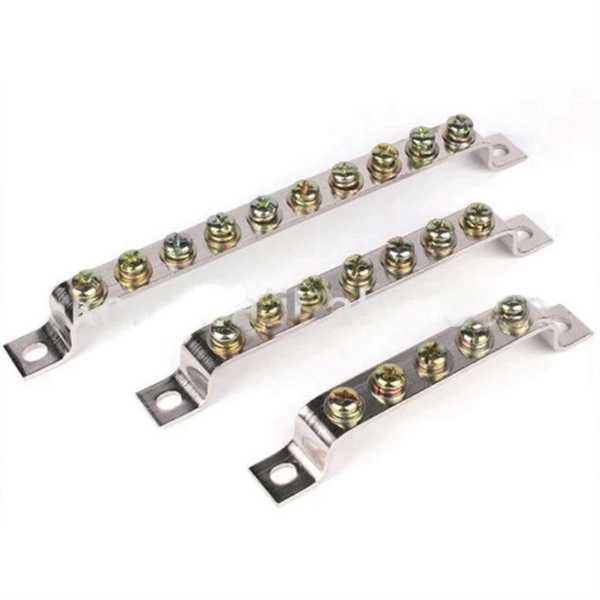
MCB / DB Boards: MCB comb copper busbars are standard in residential & commercial distribution boards. Industrial / Factory
 Industry
 Insulated Busbar Guide: Types, Materials & Applications | CZT
Insulated busbars combine the high current capacity of bare copper or aluminum conductors with electrical insulation
 Industry
 Busbars | Busbars manufacturers & supplier | Eaton
Busbars are metal bars that can be composed of numerous alloys but are most commonly copper or aluminum. Typical busbar
 Industry
 High Voltage Busbars by Intercable Automotive Solutions
High volume busbar production: employing craft precision. One of the signature products developed by
 Industry
 The Ultimate Guide to Electrical Busbars [July 2026 ]
In high-voltage switchyards and low-voltage battery banks, busbars are the go-to solution for managing incoming and
 Industry
 What is Busbar? Types, Advantages (2026 Updated Guide)
Busbar is a metal strip or rod, usually made of copper, brass or aluminum, used for grounding and conducting
 Industry
 Everything You Need to Know About Busbar Insulation
Unlock comprehensive insights on Busbar Insulation Material. Our guide covers its benefits,
 Industry
 Manufacture and electrical characterisation of high voltage insulation
The ensemble of busbars, joints and current leads must be enveloped in high voltage insulation. The busbars
 Industry
 Applications Note
Choosing insulation materials for busbars involves considering several tradeofs based on their specific properties and applications.
 Industry
 High-Voltage Copper/Aluminum Busbars in Battery
Currently, the widespread adoption of 800V high-voltage platforms in new energy vehicles
 Industry
 Busbars | Renewable Energy | CAPLINQ
Busbars are metal bars that conduct a substantial current of electricity within a switchboard, distribution
 Industry
 Busbar Technology Is Anything but Flat
Busbars are solid metal bars used to carry current. Typically made from copper or aluminum, busbars are rigid and flat — wider than
 Industry
 High Voltage Busbars
Learn how TE''s high voltage insulators provide robust, light-weight support for pantographs, busbars and other high voltage electric
 Industry
 Which material is used for bus bars?
High voltage busbars are primarily made of copper or aluminum with enhanced insulation systems. Copper is often
 Industry
 Busbar Insulation Material: A Comprehensive Guide for Modern
Our today''s blog delves into the various types of busbar insulation materials, their properties, and applications,
 Industry
 Busbar Design for High-Power SiC Converters
Busbars are critical components that connect high-current and high-voltage subcomponents in high-power converters.
 Industry
 Design Guide for bus bars
Conductor material selection is critical in meeting electrical performance and mechanical rigidity requirements. Common materials
 Industry
 Optimizing Busbars for Advanced Applications
Two insulation materials emerging for use in high-voltage vehicle applications are cross-linked polyolefin (XLPO) and nylon PA 12,
 Industry
 Busbars and Connectors in HV and EHV installations
Busbars for Outdoors Installations In HV and EHV installations and in outdoors MV installations bare
 Industry
 Understanding Busbars: Types, Applications, and Advantages
Laminated busbars consist of multiple layers of conductive material separated by thin insulating materials. This design
 Industry
 Bus bars
What materials are bus bars made from? Aluminium bus bars - what are they and what are their uses? What is the
 Industry
 Busbar choices for EV power distribution
Insulation/dielectric materials used in the construction of busbars for EVs and HEVs are as important as its conductor