Active optical devices and passive optical devices respectively
Active optical devices generate, amplify, or modulate optical signals, while passive optical devices transmit, distribute, or filter light without external power.
Active Optical Devices
Active optical devices are components that actively manipulate optical signals and require an external energy source to operate. They are essential for converting electrical signals into optical signals or vice versa, and for modulating or amplifying light in optical communication systems . Key examples include:
- Laser Diodes (LDs): Convert electrical energy into coherent light for transmission .
- Photodiodes (PDs): Convert incoming optical signals back into electrical signals .
- Optical Amplifiers (e.g., EDFA): Boost weak optical signals to maintain signal strength over long distances .
- Optical Transceivers and Receivers: Facilitate bidirectional optical communication by generating and detecting light signals . Active devices determine system performance metrics such as output power, signal bandwidth, modulation rate, and noise characteristics, making them critical for high-speed and long-distance optical networks .
Passive Optical Devices
Passive optical devices do not require external power and are used to transmit, distribute, or filter light within optical systems . They maintain signal integrity and enable efficient routing without altering the signal's fundamental properties. Common examples include:
- Optical Fibers: Guide light from one point to another with minimal loss .
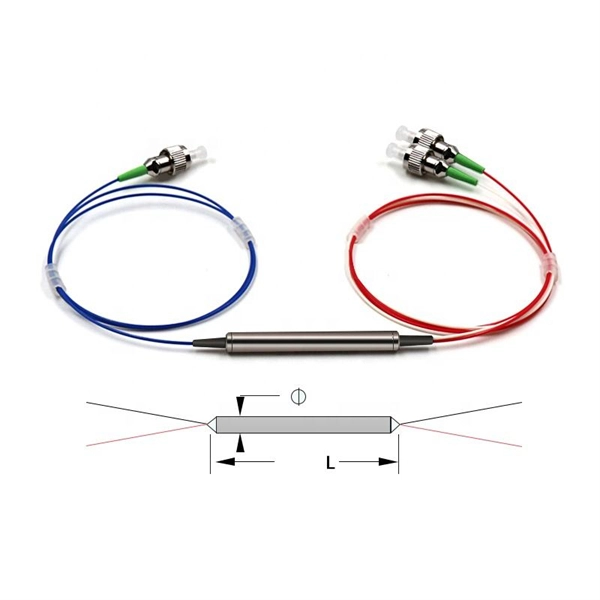
- Optical Splitters: Divide a single optical signal into multiple outputs; can be planar lightwave circuit (PLC) or fused biconical taper (FBT) types .
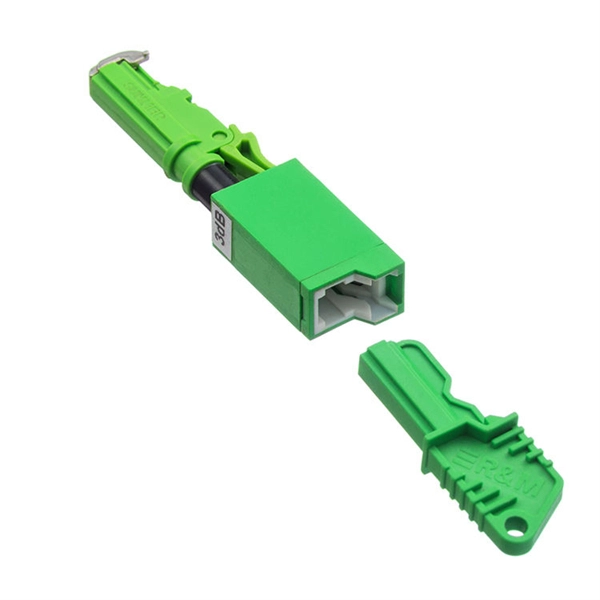
- Optical Couplers, Connectors, and Circulators: Facilitate signal routing, connection, and direction control .
- Optical Filters and Wavelength Division Multiplexing (WDM) Devices: Selectively transmit or block specific wavelengths . Passive devices are widely used in Passive Optical Networks (PONs), providing cost-effective, low-maintenance, and scalable solutions for point-to-multipoint fiber access networks .
Key Differences
| Feature | Active Devices | Passive Devices |
|---|---|---|
| Power Requirement | Requires external energy | No external power needed |
| Function | Generate, amplify, or modulate optical signals | Transmit, distribute, or filter light |
| Examples | Laser diodes, photodiodes, optical amplifiers | Optical fibers, splitters, filters, couplers |
| Role in Network | Signal source and processing | Signal routing and distribution |
| Impact on Performance | Determines bandwidth, power, and noise | Ensures stable transmission and low loss |
In summary, active devices provide the light source and signal processing, while passive devices ensure efficient transmission and distribution. Both types are essential for the proper functioning of optical communication systems, with active devices driving signal generation and modulation, and passive devices maintaining signal integrity and enabling network scalability .
 Industry
 What are photonic devices? — CamachoLab Photonics Bootcamp
Passive devices can, for example, modify: the direction of light, through bends and waveguides; the relative phase of light, through
 Industry
 Passive optical network
Passive optical network A fiber optic cable assembly with SC APC connectors, as commonly used to link
 Industry
 Design and Modelling of Passive and Active Optical Waveguide Devices
Over the last decade optical waveguide devices have penetrated into many optoelectronic systems. We just have to think of the
 Industry
 Active vs Passive Optical Splitter: Key Differences Explained
Learn the difference between active vs passive optical splitters, including working principles, use cases, and how to
 Industry
 Aktive vs. passive Bauelemente erforschen: Die Rolle der optischen
In practical use, active devices provide the source of light and signal changes, passive devices are responsible for
 Industry
 Understand active vs. Passive Components
Let''s dive into the core of fiber optic networks by exploring the two fundamental categories of components: active and passive.
 Industry
 Active & Passive Optical Network Differences | Data Path
Active and passive optical networks (AONs and PONs) are two distinct networking technologies with unique advantages and
 Industry
 Chapter 10 Passive Devices
Fibre-optic networks have experienced tremendous growth during the last few years, starting with backbone or long haul networks
 Industry
 Passive Optical Devices
In the present chapter we discuss the following passive optical devices that are of great importance in integrated optic sensors :
 Industry
 What are optical devices and their classification and applications?
Optical devices are optoelectronic components used in optical communication that perform various functions based on
 Industry
 Passive Optical Devices | Springer Nature Link
In the present chapter we discuss the following passive optical devices that are of great importance in integrated optic sensors : 1
 Industry
 Comparison of active and passive optical access networks
Active and passive optical networks are compared. Based on a reference model that covers AON and PON as well as
 Industry
 Difference Between Active Optical Network and Passive Optical Network
AON guides optical signals through active equipment,PON uses passive devices without power supply, resulting in
 Industry
 Passive Optical Network vs Active Optical Network
In general, passive optical network and active optical network have their own characteristics. Whether it is to deploy a passive optical
 Industry
 Understanding the Difference Between Active and Passive Optical
The two most common architectures powering today''s broadband systems are Active Optical Networks (AON) and
 Industry
 Passive Optical Device
The SOI platform acts as an integrated photonic bench in which passive optical devices such as wavelength multiplexers and
 Industry
 Understanding Passive and Active Optical Networks: Key Differences
Key Features of PON: Passive Components: PON uses optical splitters, couplers, and other passive devices to
 Industry
 Explore Active vs. Passive Devices: Role of Optical Components
In practical use, active devices provide the source of light and signal changes, passive devices are responsible for
 Industry
 Active vs Passive Optical Networks – AON and PON Explained
Learn the differences between Active (AON) and Passive (PON) optical networks, their advantages, and applications
 Industry
 What''s the difference between passive (PON) and active (AON) optical
The two methods are called Active Optical Networks (AON) or Passive Optical Networks (PON), and in both case the
 Industry
 Passive Devices | Springer Nature Link
An optical circulator is a non-reciprocal, passive multiport device, and its key functionality is directing light sequentially
 Industry
 What Are Passive Optical Components and How Do They Work?
What Makes an Optical Component Passive The designation “passive” separates these components from active
 Industry
 6 Passive and Active Glass Integrated Optics Devices
Over the 25 years that ensued, the technology of planar devices on glass evolved, and they became available at the beginning of the
 Industry
 Passive and Active Glass Integrated Optics Devices
Optical integration technologies were uncovered early in the emergence of the optical telecommunication field. As early as 1973, a
 Industry
 Active Optical Devices | Springer Nature Link
Active optical devices of interest in integrated optic sensors are: 1 Detectors 2 Light sources 3 Amplifiers 4 Modulators, and Switches
 Industry
 Four Active and Passive Optical Devices
Definition: Optoelectronic devices that require external power to operate. - Semiconductor Light Sources (LD, LED,
 Industry
 The Difference Between Active and Passive Optical Networks
In the optical network transmission process, we usually see the conversion of the electrical and optical signal at the