Intelligent Selection Guide for Distribution Network Automation
Effective distribution network automation requires selecting interoperable, high-performance devices, ensuring secure and low-latency communication, and integrating AI-driven monitoring for optimized grid operations.
Key Principles for Equipment Selection
1. Device Interoperability and Protocol Support Modern DNA systems must handle multiple communication protocols. Devices should support IEC 61850, DNP3, Modbus TCP, and allow protocol conversion at terminals to ensure seamless integration between substations, field devices, and control centers . Main station-terminal communication typically uses IEC 60870-5-104 or DL/T 634.5104, while terminal-device interfaces may require protocol translation for legacy equipment . 2. Environmental Adaptability Distribution network devices often operate in harsh conditions, with temperatures ranging from -40℃ to 75℃ and high humidity. Equipment should be rated for outdoor deployment, with low failure rates under extreme conditions . 3. Business Stratification and Latency Requirements Critical services like differential protection require end-to-end latency below 12ms, while high-bandwidth applications such as video surveillance demand robust throughput (e.g., 16Mbps per 4G LTE modem for 16 cameras), . Network design should separate control commands from monitoring data to prevent delays exceeding ±50ms.
Network Architecture Considerations
1. Overlay vs. Underlay Networks Overlay networks provide logical separation for different services, while underlay networks ensure physical connectivity. Intelligent DNA solutions often combine both to optimize reliability, scalability, and security . 2. Communication Technologies
- Wired and wireless WANs: Fiber, Ethernet, and cellular (4G LTE, 5G)
- 5G with TSN (Time-Sensitive Networking): Supports deterministic transmission for high-priority services
- Dense deployment at fixed points: Ensures interconnection of devices within switching stations and ring main units 3. Security and Reliability End-to-end security is essential, including MACsec encryption for gateways and secure remote maintenance. Redundant control centers and network paths enhance availability .
Advanced Features and AI Integration
1. Expanded Automation Functions Next-generation DNA systems extend beyond traditional telemetering, telesignaling, and telecontrol to include tele-adjustment, tele-vision, and tele-pulse, enabling six-remote capabilities . 2. AI and Data Analytics Artificial intelligence can support load forecasting, anomaly detection, disturbance analysis, and operational prioritization. High-quality measurement data from sensors, PMUs, and smart meters is critical for AI effectiveness . 3. Power Quality and Grid Visibility Monitoring tools like PQI-LV, PQI-DE, and WebPQ® provide continuous visibility into feeders, disturbances, and operational data, enabling proactive decision-making and efficient asset utilization .
Practical Deployment Strategy
- Protocol unification: Standardize communication to reduce interoperability issues
- Environmental adaptation: Select devices rated for extreme conditions
- Business stratification: Separate critical control traffic from monitoring and video data
- Scalable architecture: Use overlay/underlay networks and cellular gateways for flexible expansion
- AI-enabled monitoring: Integrate predictive analytics for maintenance and operational optimization
Conclusion
An intelligent selection guide for distribution network automation emphasizes interoperable, robust, and secure devices, low-latency, high-bandwidth communication, and AI-driven operational insights. By combining these elements with careful network architecture and environmental considerations, utilities can achieve reliable, efficient, and future-ready distribution grids.
 Industry
 A Simple Guide to Distribution Automation
The concept of a Smart Grid is essentially the application of automation logic to the power distribution system. Most network protection devices today, relays and
 Industry
 Microsoft Word
Georges Simard is a senior engineer of the Distribution Network Development for Hydro-Québec''s Distribution Strategic Planning. This department is responsible for defining the future technical
 Industry
 Microsoft Word
This White Paper, “Smart Grid for Distribution Systems” addresses the benefits and challenges of implementing the many different Distribution Automation functions.
 Industry
 Distribution Automation Handbook
The handbook describes various power distribution system constructions and elements there-of, technical considerations, distribution automation infrastructure and functionality, communication
 Industry
 A distributed automation architecture for distribution networks, from
With the current increase of distributed generation in distribution networks, line congestions and PQ issues are expected to increase. The smart grid may effectively coordinate
 Industry
 Key Aspects of Smart Grid Design for Distribution System Automation
The major challenge lies in distribution system automation is the selection of proper architecture and communications. In view of all these aspects, this paper present an overview of
 Industry
 Design and Application of Automation System with the Distribution
The intelligent distribution network is an important foundation and support for the smart grid, and it has covered substations at all levels. The smart substation technology general provides the definition of a
 Industry
 Advanced distribution automation in secondary substations | EEP
Automated control of devices in distribution systems is the closed-loop control of switching devices, voltage controllers, and capacitors based on recommendations of the distribution
 Industry
 Distribution Automation Handbook
Manufacturers of surge arresters have published guide-lines and selection examples to demonstrate and support the selection process. The following picture describes in principle the dependences between
 Industry
 Automation Strategies for Distribution Success
In this interactive document, we explore the four biggest imperatives to optimise, the key areas of optimisation, and the technologies and innovations delivering optimised supply chain and logistics
 Industry
 DAS_rep_final
Application of automation in distribution power system level can be define as automatically monitoring, protecting and controlling switching operations through intelligent electronic devices to restore power
 Industry
 Network automation planning in distribution networks: a feeders
This paper presents a methodology for distribution networks automation planning. The presented methodology identifies the optimal location of intelligent protection devices for improving network
 Industry
 A distributed automation architecture for distribution networks, from
Implementing the automation of electric distribution networks, from simple remote control to the application of software-based decision tools, requires many considerations, such as assessing
 Industry
 Research on the Impacts of Distribution Network Automation on the
The deployment of distribution network automation technology, which leverages the combined power of smart devices, communication networks, and automated control systems, enables continuous
 Industry
 Research and Application of Distribution Automation System
This paper centers on the mountainous distribution network automation strategy based on self-healing technology, analyzes the main components and functions of the distribution automation
 Industry
 Automation: Enhancing Efficiency and in Power Distribution Systems
lds immense potential for transforming power distribution systems. By leveraging advanced technologies, automation devices, and intelligent control mechanisms, distribution utilities can
 Industry
 Distribution network automation design and intelligent distributed FA
In view of this, on the basis of consulting and summarizing the current situation at home and abroad, this paper discusses the intelligent distributed FA fault location mode while selecting, planning and
 Industry
 Distribution Automation and the Modernized Grid | TD World
Distribution automation (DA) has emerged as a key component of the smart grid, and provides a path to achieve these critical goals. In the context of smart grid deployments today, DA refers to an
 Industry
 Grid Automation 2026: Guide for Modern Distribution Grids
Grid automation 2026: guide to monitoring, power quality, feeder measurement and transparent distribution grids.
 Industry
 Distribution Automation Design Guide, 3
This Distribution Automation (DA) architecture is a fundamental part of any Cisco network, providing enhanced, end-to-end security from the control center all the way to the edge of the distribution network.
 Industry
 Distribution Network Automation Technology based on Low-voltage
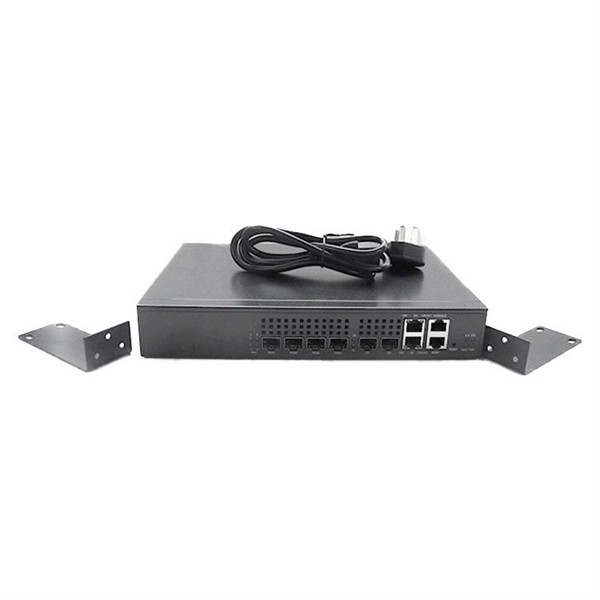
Distribution Network Automation Technology based on Low-voltage Intelligent Switch Abstract: With the continuous progress of social economy, the shortage of electric power is becoming increasingly
 Industry
 Distribution Systems Analysis and Automation | IET Digital Library
Distribution systems analysis employs a set of techniques to simulate, analyse, and optimise power distribution systems. Combined with automation, these techniques underpin the concept of the smart
 Industry
 In-depth Analysis of Intelligent Solutions for the Distribution
This solution delves into typical scenarios of distribution automation, thoroughly analyzing the selection logic for three types of equipment—industrial switches, 5G cellular routers, and 4G LTE cellular